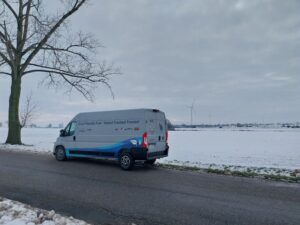

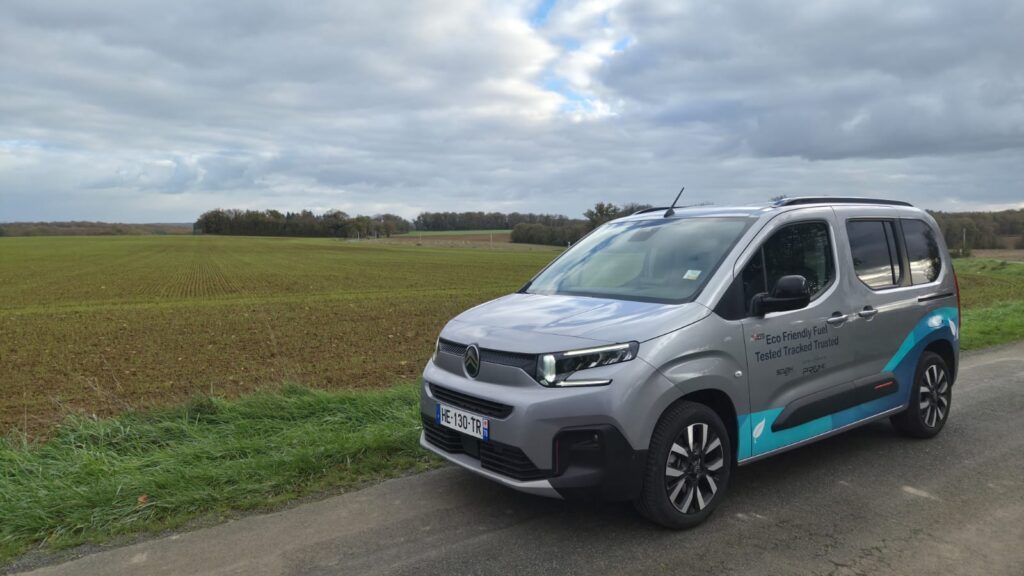
Iteuil, 10 km from Poitiers
From 24 to 30 November 2025
The second week of the Tracked & Trusted European HVO Tour took place in two very different locations: France, where the HVO network is still under construction, and Eastern Europe, where the network is already fully operational. The result was a week full of contrasts, rich in data, lessons learned… and kilometres travelled.
Citroën Berlingo: A week 100% in France (≈ 2,200 km)
Having remained in France all week, the Berlingo had to contend with one simple reality: the public HVO network is not yet fully deployed.
This requires more planning ahead, sometimes checking refuelling points… but the technology never failed.
Despite this context, nearly 2,200 km were covered, confirming the robustness of ‘wheel-to-wheel’ traceability in real-world conditions.

Bordeaux center
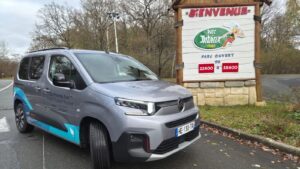
Plailly
Fiat Ducato: A European diagonal (≈ 3,300 km)
Meanwhile, the Ducato travelled from country to country, from the Mediterranean to the shores of the Baltic Sea:
France → Italy → Austria → Czech Republic → Poland → Lithuania → Latvia → Estonia → Finland.
In seven days, it went from the Mediterranean climate to the 60th parallel, in much colder conditions, without ever encountering a supply disruption.
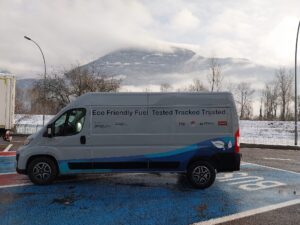
North Italy
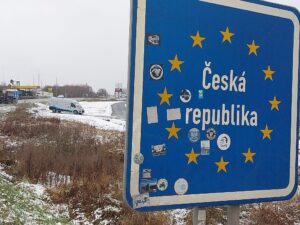
Czech Republic
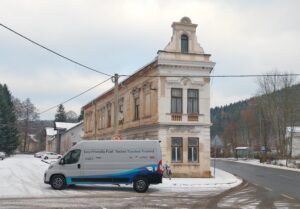
Poland
Under the hood: 1.7 million fingerprints analysed
Behind the kilometres lie the data.
This week, the two vehicles generated 5,664 certified records, incorporating nearly 40,000 field data points (GPS, %HVO, fuel temperature, CO₂).
In reality, this data comes from 1.7 million molecular fingerprints measured by FluidBOX® / H3TECH® sensors every 6 seconds.
A unique database in Europe, compiled under 100% real-world conditions.
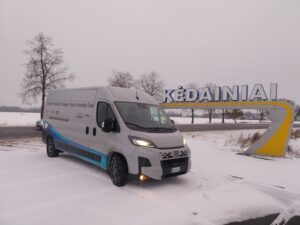
Lithuania
CO₂ impact
Over week 2:
→ nearly 0.9 tonnes of CO₂ avoided, compared to 100% B7 usage.
A measurable, verifiable impact, second by second.
What this second week proves
- The French HVO network is progressing, but remains limited.
- As soon as vehicles leave the country, access becomes fluid and continuous.
- On-board traceability works in all weather conditions: cold, rain, altitude, long distances.
- HVO significantly reduces emissions, even in partial use.
- SP3H has generated one of the largest molecular fuel databases ever produced on the road in Europe.
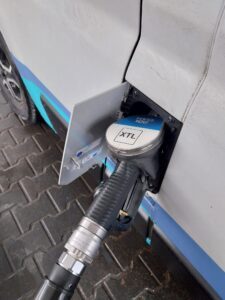
In summary
2 vehicles
5 500 km
9 countries
70 hours of driving
1.7 million fuel footprints analysed
≈ 0.9 tonnes of CO₂ avoided in 7 days
Le Tour continues to demonstrate that decarbonising existing combustion engine vehicles is possible today, without engine conversion, without new infrastructure, and with fully certified traceability.